
Dhanushkodi, Tamil Nadu: The Ghost Town by the Sea
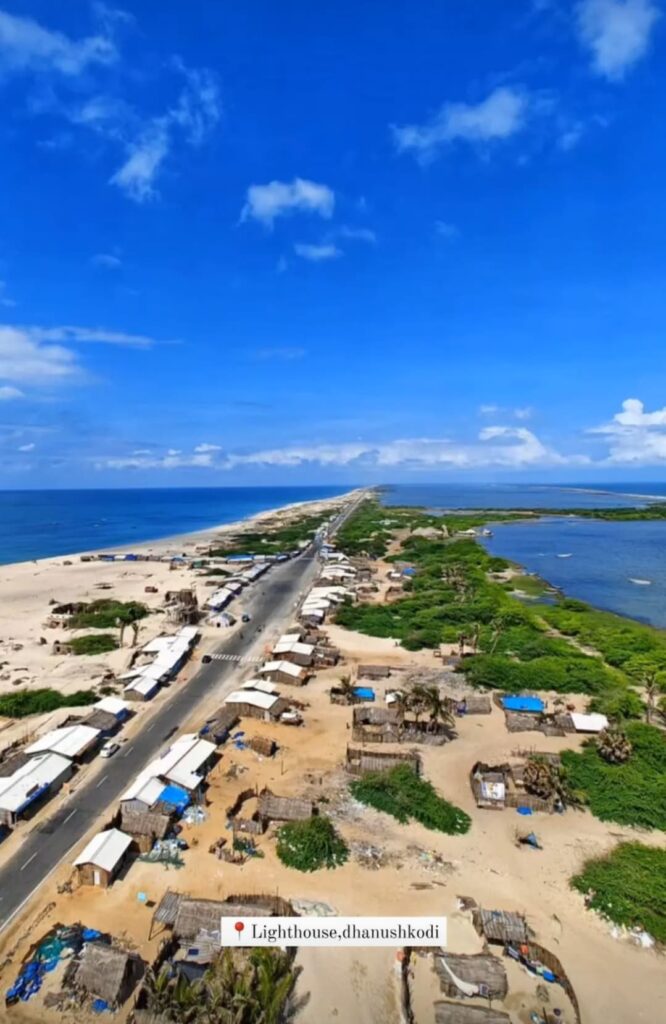
At the southern tip of Rameswaram Island in Tamil Nadu, where the Bay of Bengal meets the Indian Ocean, lies a town unlike any other — Dhanushkodi. Known as the “ghost town of India,” Dhanushkodi is a hauntingly beautiful place where time seems to stand still. Once a bustling pilgrimage and trade town, it now lies in ruins, a tragic reminder of nature’s fury and an enduring symbol of India’s spiritual past.
Though abandoned and partially submerged, Dhanushkodi draws visitors from all over the world — not just for its mystery, but for its breathtaking natural beauty, mythological legacy, and the eerie stillness that speaks louder than words.
Mythological Significance: The Bridge to Lanka
Dhanushkodi holds deep roots in Hindu mythology, particularly in the Ramayana. It is believed to be the spot where Lord Rama, with the help of his Vanara Sena (monkey army), built the famous Ram Setu or Adam’s Bridge — a causeway of floating stones that connected India to Sri Lanka.
The name “Dhanushkodi” translates to ‘end of the bow’ — it is said that Lord Rama, after defeating the demon king Ravana, used his bow (dhanush) to break the bridge at the request of Vibhishana, Ravana’s brother who sided with Rama. The point where the bridge was broken is known as Dhanushkodi.
This mythological story not only elevates Dhanushkodi’s religious significance but also makes it a pilgrimage site for Hindus, especially those visiting nearby Rameswaram.
A Thriving Town Once Lost to the Sea
Before its destruction, Dhanushkodi was a vibrant town with homes, markets, railway stations, churches, and temples. It was a vital link between India and Sri Lanka, connected by train and boat services. The town had a population of about 25,000 people and served as an important religious and trade hub.
However, tragedy struck on the night of December 22, 1964, when a powerful cyclone from the Bay of Bengal made landfall. Wind speeds reached over 280 km/h, and tidal waves as high as 7 meters engulfed the town. A passenger train with over 100 people was swept away, and the entire settlement was wiped out.
After the disaster, the Government of Madras (now Tamil Nadu) declared Dhanushkodi uninhabitable, and the town was officially abandoned.
Dhanushkodi Today: Silence Amid the Ruins
Today, Dhanushkodi stands as a ghost town, with crumbling structures and ruined walls scattered across a vast sandy stretch. The remnants of a railway station, a church, and houses speak of a town that once flourished, now reclaimed by the sands and sea.
But despite its desolation, the town is alive in spirit. Pilgrims, tourists, photographers, and history enthusiasts visit Dhanushkodi for its raw beauty, unique atmosphere, and deep sense of calm.
Places to Explore in Dhanushkodi
1. Ruins of the Church and Railway Station
One of the most iconic sights is the ruined church, with weathered walls and exposed stone. Once a prominent religious center, it now stands roofless, with the sky peeking through its remains. Nearby, the old railway station — once a gateway to Sri Lanka — lies in ruin, a haunting reminder of the past.
2. Dhanushkodi Beach
The endless, clean, and untouched Dhanushkodi Beach offers a stunning view of the sea meeting the sky. The contrast of the two oceans — the calmer Bay of Bengal and the rougher Indian Ocean — is visible here. The beach is perfect for reflection, photography, or simply soaking in the beauty of nature.
3. Arichal Munai
Arichal Munai, or Land’s End, is the southernmost tip of Rameswaram Island and the closest point to Sri Lanka, just about 18–20 km away. It is also considered the place from where the Ram Setu begins. On clear days, one can even imagine the chain of shoals and sandbars stretching into the ocean.
4. Ram Setu Viewpoint
While the actual bridge is now mostly submerged, satellite imagery and sea-level surveys have confirmed the presence of a submerged causeway. Though not visible to the naked eye, the idea that one is standing near a path possibly walked by Lord Rama himself is enough to stir the imagination.
The Drive to Dhanushkodi: A Journey Through Solitude
Reaching Dhanushkodi is an experience in itself. A well-constructed road known as the Marine Drive of the South takes visitors from Rameswaram to Dhanushkodi. The stretch, flanked by ocean on both sides, feels like you’re driving into the sea. With vast stretches of sand, dunes, and salty breeze, the road is both surreal and scenic.
Earlier, the last few kilometers had to be traveled by jeeps through sandy tracks, but now with improved infrastructure, visitors can drive right up to Arichal Munai.
Religious Significance and Pilgrimage
For Hindu devotees, visiting Dhanushkodi is often combined with the Rameswaram pilgrimage, especially after taking a dip in the Agni Theertham (sacred sea) and visiting the Ramanathaswamy Temple. Some pilgrims believe that visiting Dhanushkodi completes their spiritual journey, as it symbolizes the divine crossing to Lanka and the triumph of good over evil.
Tips for Visitors
- Best Time to Visit: October to March is ideal, with pleasant weather and clear skies. Avoid visiting during the monsoon season due to rough sea and road conditions.
- Timings: The area is typically open from 6:00 AM to 6:00 PM. Overnight stays are not allowed as it remains uninhabited.
- Carry Essentials: There are limited food or water facilities, so it’s wise to carry snacks, drinking water, and sun protection.
- Respect the Environment: As Dhanushkodi is ecologically sensitive, avoid littering and respect the natural surroundings.
- Stay Options: Accommodation is available in Rameswaram, about 20 km away, which offers hotels, lodges, and guesthouses.
A Photographer’s Paradise
Dhanushkodi offers a rare combination of desolation and beauty that captivates photographers. From silhouetted ruins against pastel skies to sweeping views of ocean horizons, every frame tells a story. The light at sunrise and sunset, in particular, gives the ghost town an ethereal glow.
Conclusion: Where Myth Meets Reality
Dhanushkodi is not just a destination; it’s a journey into India’s ancient epics, colonial history, and the raw force of nature. It’s a place where you walk with the past, listen to the wind whisper stories, and witness the endless meeting of land, sea, and sky.
Whether you come for its mythological charm, its tragic history, or its unspoiled natural beauty, Dhanushkodi will leave you in awe. As you stand at Land’s End, watching the waves crash where the Ram Setu once began, you’ll feel a powerful silence — one that tells of gods, storms, and a city that still breathes through its ruins.