
Rameshwaram: The Sacred Bridge Between Devotion and Legend
Located on Pamban Island in the southeastern part of Tamil Nadu, Rameshwaram is one of the holiest pilgrimage towns in India. Steeped in mythology, history, and architectural splendor, it forms one of the Char Dham (four sacred sites) in Hinduism, alongside Badrinath, Dwarka, and Puri. Flanked by the Bay of Bengal on one side and the Indian Ocean on the other, Rameshwaram offers a serene, spiritual, and deeply symbolic experience for pilgrims and travelers alike.
It is believed to be the place where Lord Rama, on his journey to rescue Sita from Ravana, built the famous Ram Setu (Adam’s Bridge) with the help of Lord Hanuman and his Vanara Sena. Today, Rameshwaram continues to echo with chants, rituals, and a divine aura that transcends time.
Mythological Roots: Ramayana and Beyond
The roots of Rameshwaram lie in the epic Ramayana. According to legend, after defeating Ravana, Lord Rama returned to Rameshwaram and wished to worship Lord Shiva to absolve himself of the sin of killing a Brahmin (Ravana was a Brahmin by birth).
Lord Rama instructed Hanuman to bring a Shivalinga from the Himalayas. As Hanuman took time, Sita made a Shivalinga out of sand, which Lord Rama worshipped. This linga, called the Ramalingam, is the principal deity of the Ramanathaswamy Temple.
This story not only forms the spiritual foundation of the town but also signifies the unity of Vaishnavism (devotion to Vishnu/Rama) and Shaivism (devotion to Shiva).
Ramanathaswamy Temple: The Spiritual Heart
The Ramanathaswamy Temple is the centerpiece of Rameshwaram, both in faith and architecture. It is one of the twelve Jyotirlingas — sacred shrines of Lord Shiva — and a prime reason why millions of devotees visit the town annually.
Architectural Splendor
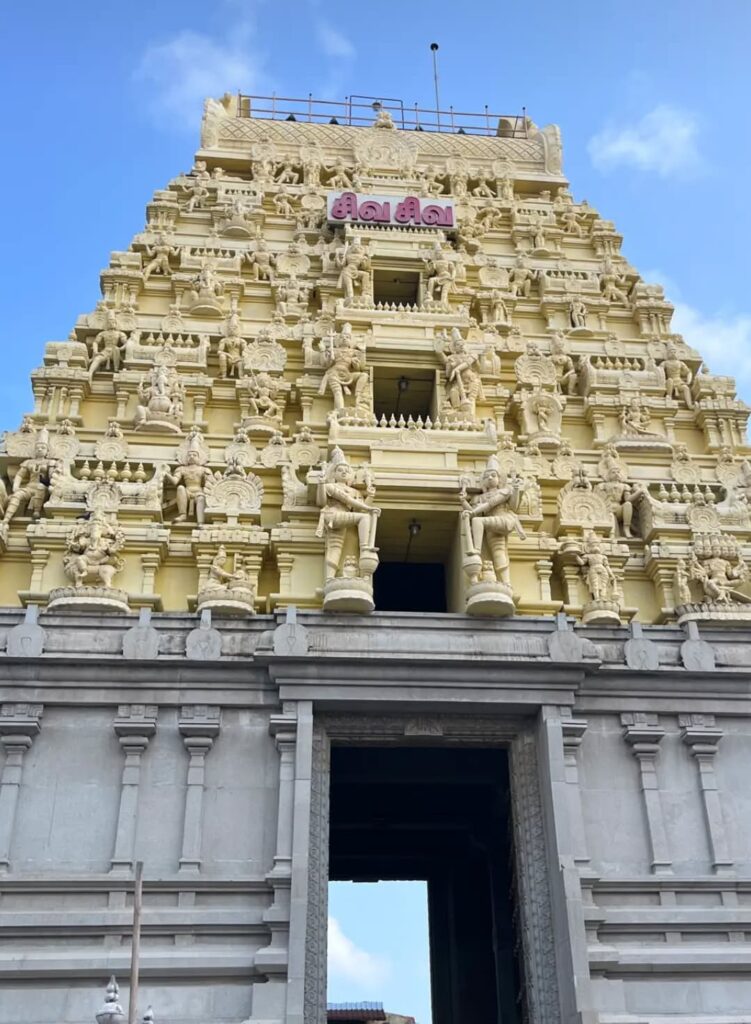
- Built in Dravidian style, the temple features towering gopurams (gateways), massive corridors, and intricately carved pillars.
- The corridors are the longest in any Hindu temple in India, stretching over 1,200 meters.
- The temple has 22 theerthams (sacred water tanks) inside the premises. Pilgrims perform ritual baths in each tank, believed to purify the body and soul.
The temple is not just a place of worship; it is a living symbol of India’s artistic, architectural, and spiritual legacy.
Agni Theertham: Sacred Sea Bath
Just outside the temple is Agni Theertham, a sacred sea point where devotees take a dip before entering the temple. It is believed that Lord Rama himself bathed here before worshipping Shiva. The sea is calm and shallow, making it ideal for ritual baths.
According to legend, Agni (the fire god) bathed here to purify himself after accompanying Sita’s agni pariksha (test by fire), giving the spot its name.
Ram Setu (Adam’s Bridge): Myth Meets Mystery
One of the most fascinating features of Rameshwaram is the legendary Ram Setu, a chain of limestone shoals connecting India’s Pamban Island to Mannar Island in Sri Lanka.
Satellite imagery has revealed the existence of a submerged bridge-like formation, fueling debates and research around the Ramayana’s historicity. According to the epic, this bridge was built by Lord Rama’s army to reach Lanka.
Though access to the full structure is restricted, parts of Ram Setu can be seen from Dhanushkodi, making it a powerful blend of faith and archaeology.
Dhanushkodi: The Ghost Town by the Sea
About 20 km from Rameshwaram lies Dhanushkodi, a now-abandoned town that was once bustling with life until a devastating cyclone hit in 1964, wiping out the entire town. Today, it is known as the “ghost town of India”.
Dhanushkodi is also associated with mythology. It is said that this was the place where Lord Rama marked the end of the bridge with his bow — hence the name “Dhanush-kodi” (end of the bow).
The area offers stunning views of two oceans meeting, ruined churches, sandy shores, and the famous Arichal Munai, the land’s end.
Pamban Bridge: Engineering Marvel
Connecting the mainland to Rameshwaram Island is the Pamban Bridge, India’s first sea bridge, opened in 1914. It is both a rail and road bridge and offers spectacular views of the ocean.
The railway bridge is especially famous for its double-leaf bascule section, which lifts to allow ships to pass. Watching a train cross this bridge over the emerald waters is a sight to behold.
Kothandaramaswamy Temple
Situated on the way to Dhanushkodi, this temple stands at the very spot where Vibhishana, Ravana’s brother, is said to have surrendered to Lord Rama. The temple miraculously withstood the 1964 cyclone and remains intact to this day.
Gandhamadhana Parvatham
Located at the highest point in Rameshwaram, this spot offers panoramic views of the entire island. It houses a footprint of Lord Rama in stone, and is revered as the place where Rama stood and surveyed Lanka before the battle.
Local Culture and Traditions
Rameshwaram is not just about temples; it’s also about experiencing South Indian culture, delicious vegetarian cuisine, and traditional rituals. From fresh coconut water and filter coffee to banana leaf meals and devotional music, every part of the journey is spiritually and culturally immersive.
You can also explore local markets selling shell crafts, conch items, rudraksha beads, and religious souvenirs.
Best Time to Visit
The best time to visit Rameshwaram is from October to April when the weather is pleasant and suitable for temple visits and sightseeing.
- Summers (March–June): Hot and humid, but manageable.
- Monsoon (July–September): The town receives moderate rainfall.
- Winter (October–February): Ideal season with pleasant climate.
How to Reach Rameshwaram
- By Air: The nearest airport is Madurai (175 km). From there, buses and taxis are available.
- By Train: Rameshwaram is well-connected to major cities like Chennai, Madurai, and Coimbatore.
- By Road: Buses run regularly from Madurai, Kanyakumari, and other nearby towns.
Travel Tips
- Dress modestly when visiting temples.
- Be prepared for early morning rituals — temple darshan often starts by 5 AM.
- Carry extra clothes if planning to bathe in theerthams.
- Respect local traditions and keep temple premises clean.
Conclusion: A Divine Journey of Faith and Wonder
Rameshwaram is not just a place on the map; it’s a journey into India’s spiritual heart. From the divine corridors of Ramanathaswamy Temple to the mysterious waters of Ram Setu, from the stillness of Dhanushkodi to the sacred bath in Agni Theertham, every corner of this town resonates with devotion, history, and divine energy.
Whether you seek religious fulfillment, cultural enrichment, or natural beauty, Rameshwaram offers an experience that touches the soul. In its waves and winds, temples and tales, Rameshwaram whispers the age-old story of dharma, faith, and the eternal bond between God and devotee.